MENUMENU
MENUMENU
MENUMENU




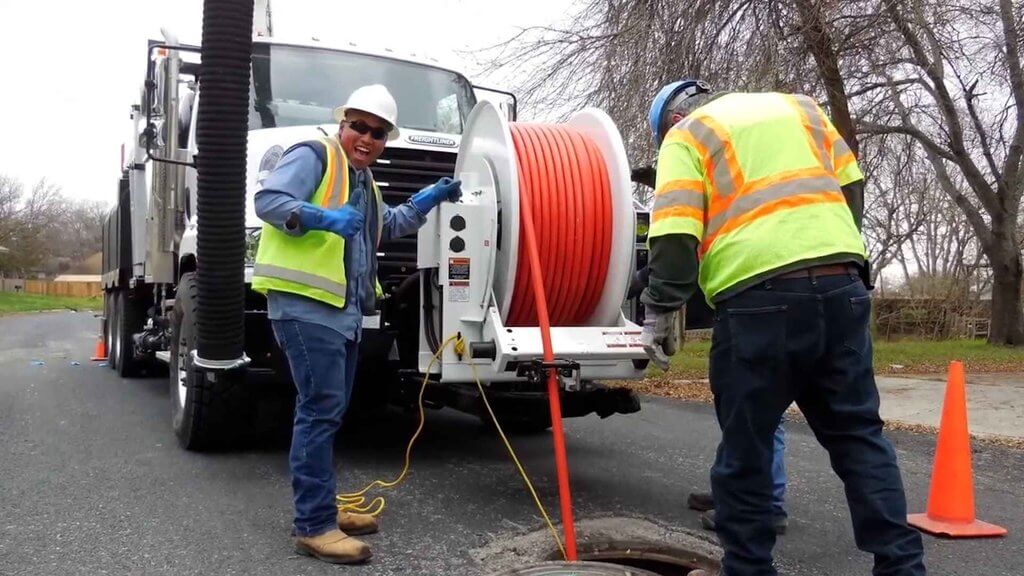
Storm drains are easy to overlook when they’re working properly. But leaves, sediment, trash, and other debris collect in catch basins and drainage lines over time, and enough buildup can restrict the movement of stormwater.
Municipalities, public works departments, contractors, and commercial property operators rely on regular storm drain maintenance to keep these systems clear. A storm drain cleaning truck gives crews high-pressure jetting and vacuum capabilities for removing accumulated material from drainage lines, catch basins, and other stormwater infrastructure.
The right equipment depends on the drainage system being maintained, how much material crews typically remove, access to the work area, and the other jobs the truck needs to handle.
Storm drainage systems collect runoff from streets, parking lots, facilities, and other developed areas. Along with that runoff comes sediment, leaves, litter, gravel, and other material that can settle inside catch basins and drainage lines.
As debris accumulates, available capacity within the system can decrease. Routine storm drain inspection and cleaning allow maintenance crews to remove that material before it contributes to clogged inlets, restricted pipes, standing water, or other drainage problems.
Cleaning schedules may also change throughout the year. Leaves can create additional maintenance needs in the fall, while sand, grit, and road treatment materials may accumulate during and after winter. Crews can also inspect and clean known problem areas ahead of periods when heavy rainfall is expected.
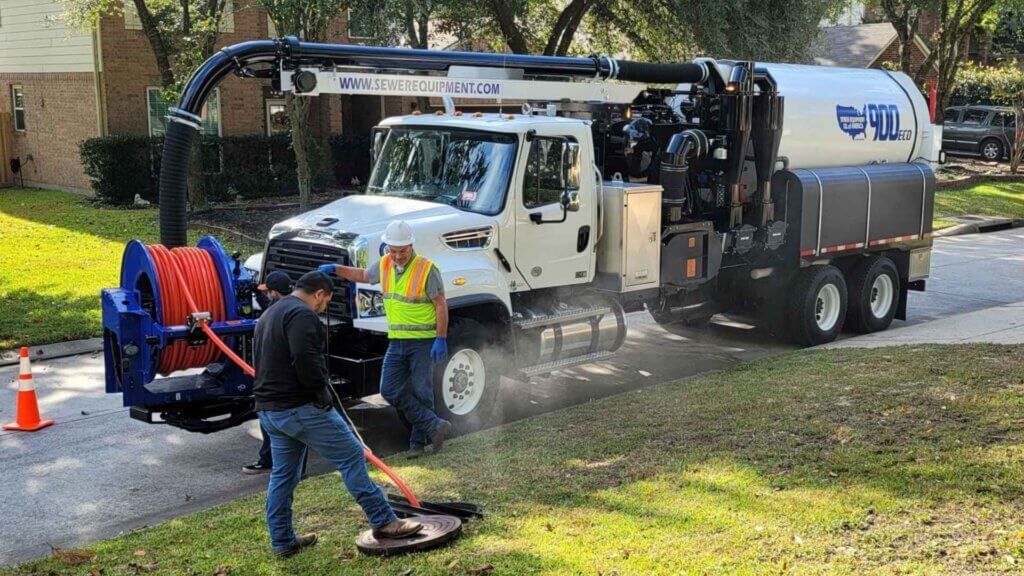
Combination sewer cleaners bring high-pressure water jetting and vacuum capabilities together on one truck.
For storm drain maintenance, high-pressure water helps loosen and move accumulated material within drainage lines. The vacuum system removes sediment, mud, standing water, and other debris from catch basins, manholes, and drainage structures and transfers it into the truck’s debris tank.
Crews can use the same machine to clean drainage lines and recover material from the system. Depending on its configuration, a combination truck can also handle sanitary sewer maintenance and other jetting and vacuum applications.
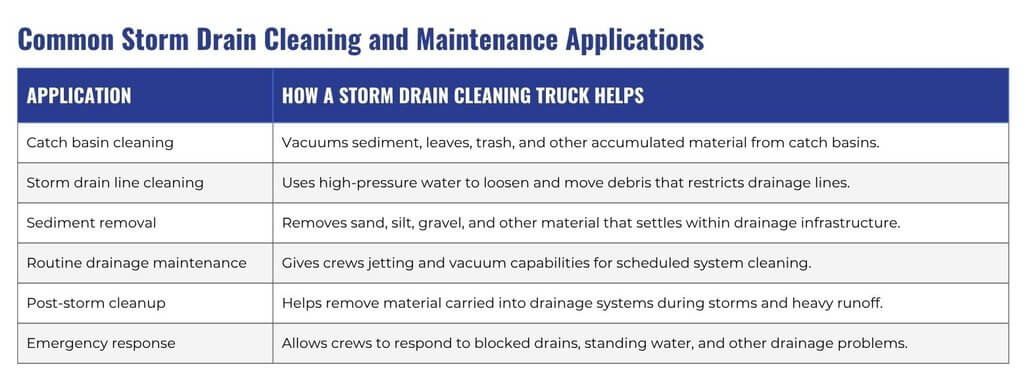
Catch basins collect sediment and debris before that material travels farther into a storm drainage system. Regular cleaning removes the material that accumulates there and helps maintain available capacity.
A combination truck’s vacuum system allows crews to remove wet sediment, leaves, trash, and other debris directly from the structure. The material travels through the vacuum hose and into the truck’s debris tank, where it remains contained for transport and disposal.
For crews that regularly maintain catch basins, vacuum performance, debris tank capacity, and boom reach are important equipment considerations. A larger debris tank can reduce unloading stops during higher-volume work, while boom reach affects how easily operators can position the vacuum hose over the structure being cleaned.
Material that moves beyond a catch basin can accumulate within drainage pipes. Sediment, gravel, and other debris may restrict the line and reduce its ability to carry runoff.
High-pressure jetting loosens accumulated material and moves it through the pipe. Crews can then recover that material with the truck’s vacuum system at an accessible catch basin, manhole, or drainage structure.
Having both systems available is useful for crews responsible for complete drainage systems. They can remove material from catch basins while also addressing buildup within connected storm drain lines.
Unlike traditional excavation equipment that leaves spoil piles around the jobsite, a hydro excavation truck collects excavated material as work progresses.
The combination of water and vacuum allows operators to remove soil, mud, and debris in a single operation, reducing cleanup and helping keep work areas organized.
Efficient debris removal also allows crews to continue working without repeatedly repositioning material or bringing in additional equipment for cleanup.
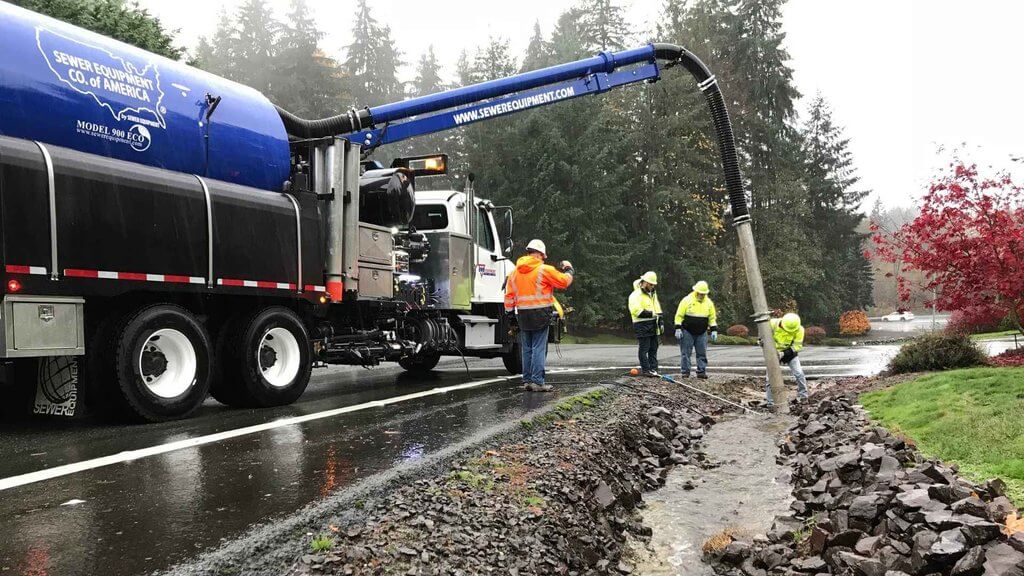
Rainfall intensity, drainage system capacity, infrastructure condition, and accumulated debris all affect how well a stormwater system handles runoff.
Routine cleaning addresses debris and sediment that maintenance crews can remove. Keeping inlets, catch basins, and drainage lines clear helps preserve available drainage capacity and reduces the chance that an avoidable blockage contributes to localized flooding.
Public works departments can also use inspection and maintenance records to identify structures that fill quickly or locations with recurring blockages. Those areas may need more frequent attention than the rest of the system.
Storm drainage infrastructure is found well beyond municipal streets. Commercial properties, industrial facilities, parking areas, and other developed sites can all have catch basins and drainage lines that require maintenance.
A public works department may maintain hundreds or thousands of drainage structures throughout a community. Contractors may clean systems for municipalities and private customers. Commercial and industrial maintenance teams may be responsible for drains around parking areas, loading facilities, internal roadways, or other paved surfaces.
Those jobs don’t always call for the same truck. Large drainage networks and high-volume cleaning programs may require more water and debris capacity. Parking structures, congested streets, and other confined areas place greater importance on truck dimensions and maneuverability.
Cleaning performance matters, but crews also have to operate, maintain, and position the truck every day. Equipment should fit the work without creating unnecessary complications for operators or mechanics.
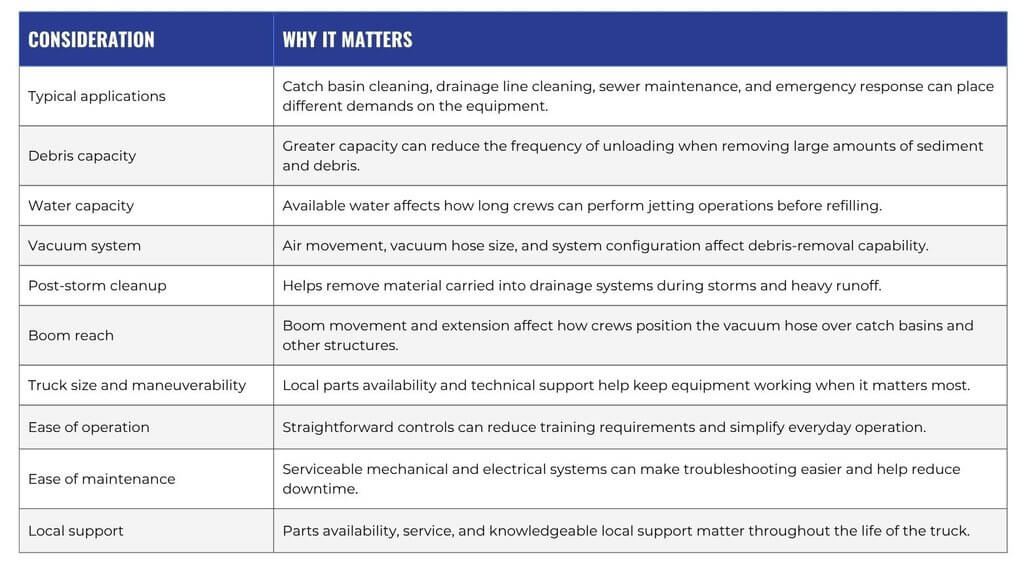
Fleets that handle several types of infrastructure maintenance should also consider how often the truck will be used outside of storm drain cleaning. A combination sewer cleaner that can handle storm drains, catch basins, sanitary sewers, and other jet vac work gives crews more ways to use the equipment throughout the year.
Truck size should reflect where crews work and how much material they typically handle.
A full-size combination sewer cleaner provides greater water and debris capacity for demanding municipal and contractor maintenance programs. More onboard capacity can help crews stay on the job longer before stopping to refill water or unload debris.
Compact equipment can be better suited for congested streets, parking facilities, commercial properties, and locations where access is limited. Smaller combination trucks can also work well for lower-volume maintenance and emergency response.
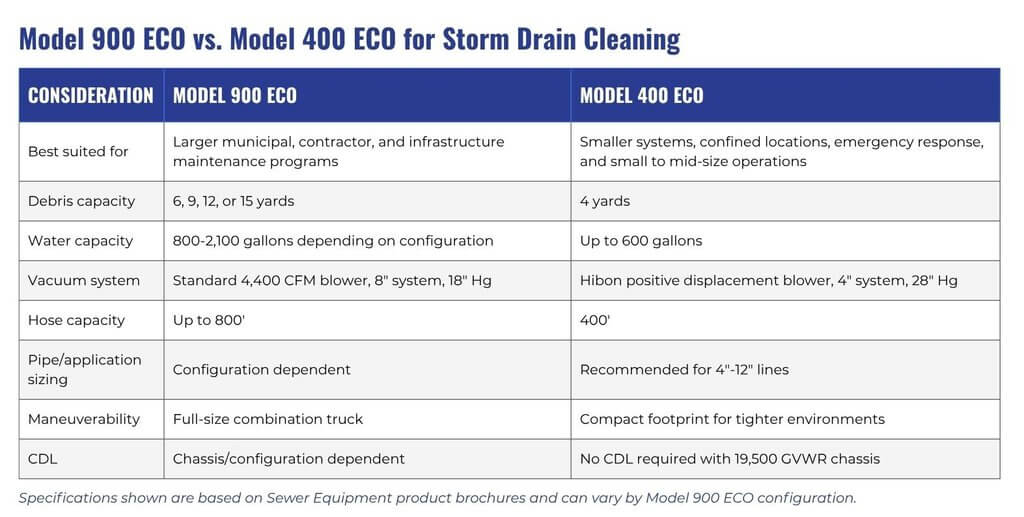
Sewer Equipment offers both options through the Model 900 ECO Combination Sewer Cleaner and Model 400 ECO Mini Combination Sewer Cleaner.
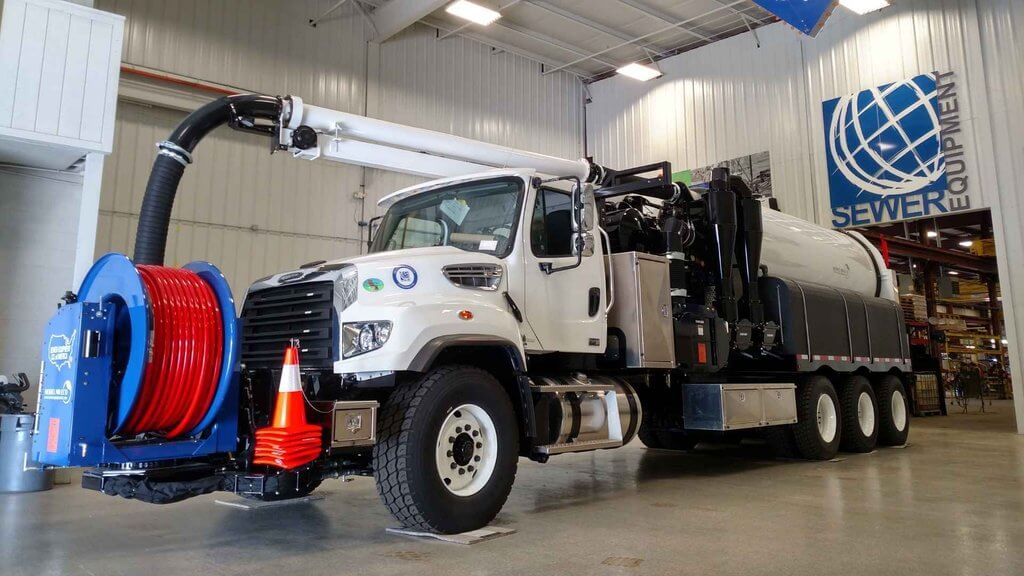
For municipalities and contractors handling larger drainage systems and demanding cleaning schedules, the Model 900 ECO combines high-pressure jetting and vacuum performance with a range of debris and water capacities.
Depending on configuration, the Model 900 ECO is available with 6-, 9-, 12-, or 15-yard debris capacity. Maximum water capacity ranges from 800 gallons on the 6-yard configuration to 2,100 gallons on the 15-yard configuration. The truck accommodates up to 800 feet of 3/4- to 1-inch hose.
Its standard vacuum system includes a 4,400 CFM blower, 8-inch vacuum hose system, and 18-inch Hg vacuum rating. Material enters the debris tank before the air passes through dual cyclone separators and dual-element 10-micron final filters. This three-stage system helps keep material from reaching the blower.
For catch basin and drainage structure cleaning, the hydraulic-powered boom provides a 180-degree working radius and 10 feet of extension. Multiple water pump configurations are available to accommodate different jetting requirements.
A combination truck may be used throughout a long workday by operators with different levels of experience. Straightforward controls can make training easier and reduce unnecessary steps when crews move between jobs.
The Model 900 ECO uses Sewer Equipment’s patented Hydro Drive powertrain system to power the pump, blower, and auxiliary hydraulic systems directly from the chassis engine. When entering work mode, the truck remains in neutral rather than using a transfer case.
Once the truck is in neutral and the parking brake is applied, jetting and vacuum functions are controlled from the operator interface on the hose reel. Operators engage Work Mode, followed by the water pump, blower, and throttle controls needed for the job.
The Model 900 ECO also uses 12-volt switches, relays, and solenoids along with manual hydraulic controls. According to the product brochure, mechanics can perform diagnostic analysis with a test light and hydraulic pressure gauge without requiring a laptop with specialized diagnostic software.
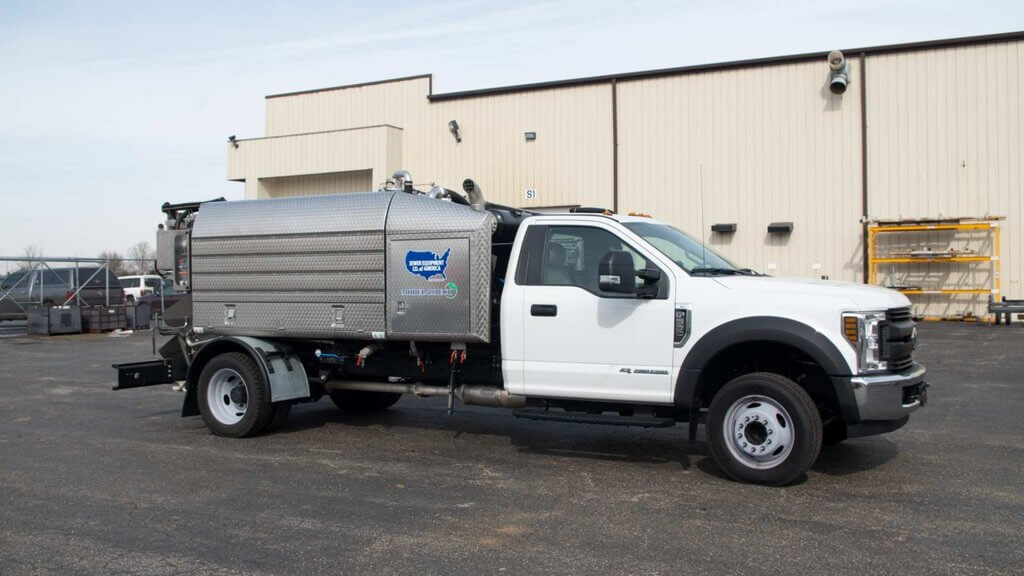
For jobs where access is a bigger concern, the Model 400 ECO provides jetting and vacuum capabilities on a compact chassis.
The Model 400 ECO is built on a 19,500 GVWR chassis, so a CDL is not required to drive or operate the truck. It is sized to enter a standard 10-foot parking structure, making it useful for densely populated urban environments and other locations where a conventional combination sewer cleaner can be difficult to maneuver.
The Model 400 ECO includes a 4-yard stainless-steel debris tank and up to 600 gallons of water capacity. Its water system uses a UDOR pump rated at 18 GPM at 4,000 PSI. The vacuum system uses a Hibon positive displacement blower rated at 28 inches Hg with a 4-inch system.
The truck also includes a stainless-steel hose reel with 400 feet of 1/2-inch hose, and Sewer Equipment identifies the Model 400 ECO as ideal for 4- to 12-inch lines.
For smaller drainage systems, routine maintenance, and response work in confined locations, the Model 400 ECO gives crews jetting and vacuum capability without the dimensions of a full-size combination truck.
Storm drain cleaning puts equipment in regular contact with water, sediment, and abrasive debris. Construction, serviceability, and access to parts can affect how easily a fleet keeps that equipment working over time.
The Model 900 ECO uses Duraprolene water tanks designed to resist corrosion and dents. Its three-stage air system separates material before air reaches the positive displacement blower, while its straightforward electrical and hydraulic systems are designed to make diagnostics manageable for fleet mechanics.
The Model 400 ECO uses stainless-steel construction for its debris tank, water tank, hose reel, and full shroud.
Local parts availability and service support should be considered alongside the truck itself. When equipment is part of a regular drainage maintenance schedule, getting parts and technical help quickly can make a difference in how long a truck stays out of service.
The right storm drain cleaning truck should match the drainage structures being maintained, the amount of material crews typically remove, the environments where they work, and any other jetting or vacuum applications the truck needs to handle.
For larger maintenance programs, the Model 900 ECO offers multiple water and debris capacities along with full-size jetting and vacuum capabilities. For crews that regularly work in tighter locations, the Model 400 ECO provides those core jet vac functions in a more compact package.
If you’re evaluating storm drain cleaning equipment for your fleet, your local Sewer Equipment rep can help you compare the Model 900 ECO and Model 400 ECO and determine which configuration fits your drainage maintenance needs.