MENUMENU
MENUMENU
MENUMENU




Sewer jetting is a method of cleaning out sewers and drain lines by using high-pressure water streams through specialized jetting nozzles to dislodge and clear obstructions, as well as perform regular maintenance to prevent sewage backups. Regardless of whether the location is residential or a larger municipality, sewer jetting is crucial for maintaining storm drains and sewer lines in optimal condition, thereby preventing damage and mitigating further deterioration of the sewers.
There is a multitude of materials that can block and cause damage to sewer lines; fats, oils, grease, minerals, mud, sludge, dirt, and tree roots are all commonly found clogging sewers. There are a variety of machines, nozzles, and other tools that can tackle these jobs, but sewer jetting remains one of the easiest and safest methods of cleaning out sewer and drain lines.
Sewer jetters are known by various names, including hydro jetters and sewer cleaners, and can be mounted on a truck, trailer, or skid. One of our most common systems is the 184HD trailer jetter. Regardless of what it may be called or mounted on, its purpose remains the same: to clean and maintain sewer systems using high-pressure water jets to clear debris and unwanted materials.
In sewer jetting, an engine (or another power source) powers a high-pressure water pump that builds up within the containment unit, effectively pressurizing the water. All high-pressure jetting units are rated by Pressure (PSI) and Water Flow (GPM). Both PSI and GPM are direct results of the available engine’s horsepower.
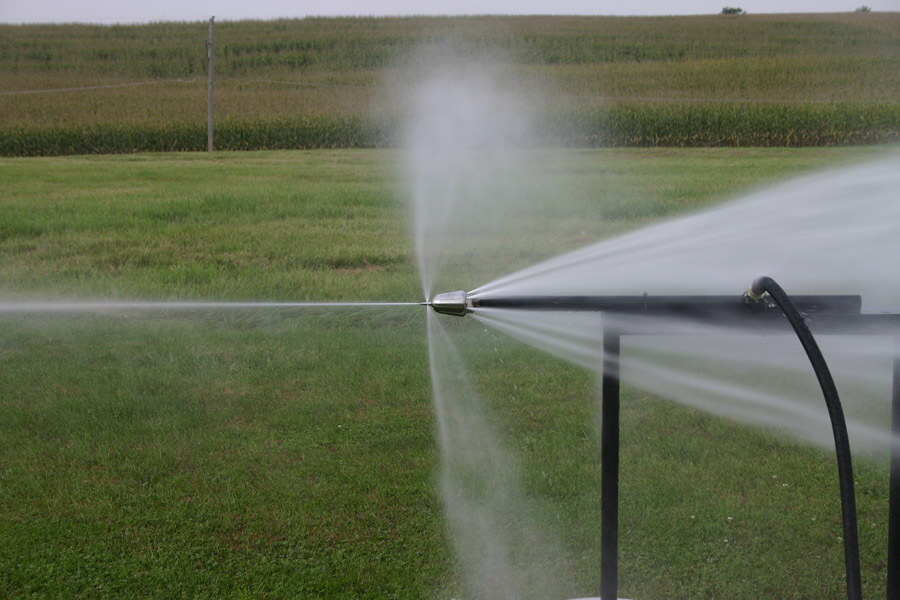
The high-pressure pump delivers water to a hose reel containing a high-pressure jetting hose. This hose should be matched for the appropriate pressure and system flow. Once attached to the end of the jetting hose, the nozzle creates pressure within the system. Every nozzle is designed to direct high-pressure water streams back towards the entry point. This is to help propel the nozzle further down the line and pull the jetting hose through the pipe. It’s important to note that nozzles must be sized to match the design of the engine and water pump. Additionally, one should consider the fact that pressure loss is a function of both the diameter and length of the jetting hose.
Angles of the water stream can be varied; water streams directed more toward the pipe wall surfaces produce better cleaning results. However, this diminishes the pulling power of the nozzle. Water streams directed towards the centerline of the pipe provide maximum pulling power but decrease pipe wall cleaning effectiveness.
To clear a clogged sewer line, use a nozzle with a forward jet or jets. Forward jets only use a small proportion of the total GPM to bore through a blockage. This helps minimize loss of propulsion when clearing a clogged line. The forward jet is designed to bore into the blockage, allowing the rear jets with more flow to remove the bulk of the blockage. Note that a forward jet(s) may have reduced flow per orifice compared to the rear nozzle orifices; the pressure (PSI) is always the same at all orifices (but not always the pressure you think it might be, read more below).
It’s also important to note that depending on the material components of the blockage, different variations of flow and pressure are preferable. It boils down to a simple question: Are you trying to cut through debris, or are you trying to flush the line out?
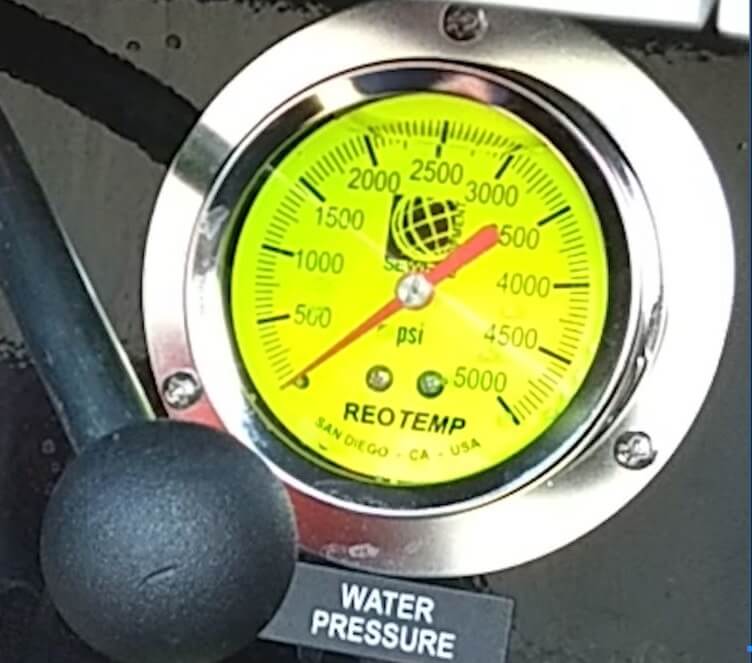
When jetting sewer lines, no single combination of flow and pressure will be optimal in all situations. It’s important to analyze each situation to determine what machine and/or nozzle you’ll use.
For example, if you’re looking to cut through grease, hard-packed dirt, or tree roots, PSI should be your main focus. Generally, a pressure of 3,500 to 4,000 PSI with a flow of at least 6 gallons per minute is capable of breaking through most blockages. On the other hand, flushing sand or other fine, loose debris from a sewer line is more effective with a flow of 40 to 60 gallons per minute and a pressure of approximately 1,500 PSI, which effectively pushes the sand to the catch basin.
Additionally, it’s essential to consider that differences in hose diameter, length, and pipe diameter all contribute to pressure loss and determine the optimal flow rate. Generally speaking, as hose length and/or diameter increases, the operator will experience pressure loss at the jetting nozzle. This means operators aren’t cleaning with the pressure they think they are, so consider this pressure loss (or, on the opposite end, over-pressurizing a system beyond the bursting point of the sewer hose or machine specifications can lead to catastrophic results). As pipe diameter increases, the higher flow rating you’ll need to properly flush all the broken-up debris down the line.
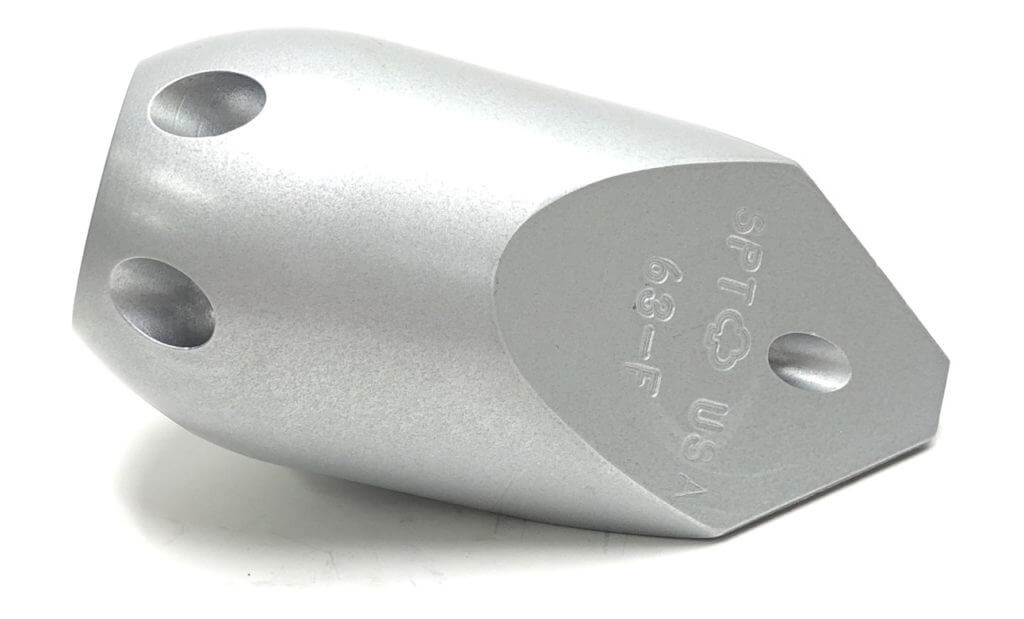
To penetrate a root mass or blockage, allowing the rear to remove the blockage entirely, operators should always use a jet nozzle with a forward jet. However, it’s essential to use front-facing jet nozzles only for clearing direct blockages until the flow reoccurs. All of the rear jets can fully clean the sewer and pipelines once the flow has been re-established. This is a basic high-pressure jetting principle used on pipes of varying diameters. It’s always good to have a spare nozzle for both cutting through debris and flushing debris, as any nozzle with a front-facing jet will be less efficient than one without it.

Storm drains collect and dispose of rainwater from roadways, parking lots, and rooftops. However, storm drains can collect gravel, dirt, and debris that can restrict flow or cause a complete blockage. High-pressure jetting can clean storm drain lines, clearing blockages and removing silt and debris accumulations. For optimal cleaning performance, use a heavy-duty nozzle (or a nozzle with a drain extension) to keep the nozzle positioned at the bottom of the pipe.

Grease, fats, and oil from wastewater can congeal on pipe walls, causing flow restrictions. High-pressure jetting with an all-rear nozzle or a rotary-spinning nozzle removes grease buildup and restores the pipe to full flow capacity. Jetting with 18 GPM at 4000 PSI breaks down grease into sand-like particles that flow downstream without causing blockages or the possibility of additional congealing on pipe walls.

If there are heavy deposits in the sewer line, the operator may choose to “step clean” the line by jetting a specific distance and then slowly retrieving the nozzle. The rear jets can clear heavier debris and materials from the line, pushing the waste back towards the user. Then, the operator extends the hose even further up the line to step clean the next section. Again, the operator slowly retrieves the nozzle to flush the newly dislodged debris out of the line.
For example, an operator may choose to extend the hose by 50 feet initially, then slowly retrieve it. Once all materials are expelled from the first 50 feet, the operator extends the hose reel to 100 feet. This process can continue for as many feet of hose as the operator needs to use. Step cleaning is a very useful tactic against sewer lines with heavy or stubborn buildup.
