MENUMENU
MENUMENU
MENUMENU




by Chris Falk, Air Excavation Product Manager for RAMVAC
Only a fool would claim that in a side-by-side single-hole dig comparison, air excavation would be faster than hydro excavation. Water will always cut faster and help dig faster. However, if we step back a moment and examine all the time factors involved with a given project, we can begin to understand that there are times when digging with air might be a better or faster alternative. Let’s examine a few factors that may determine when it’s best to use air or water for an excavation project.
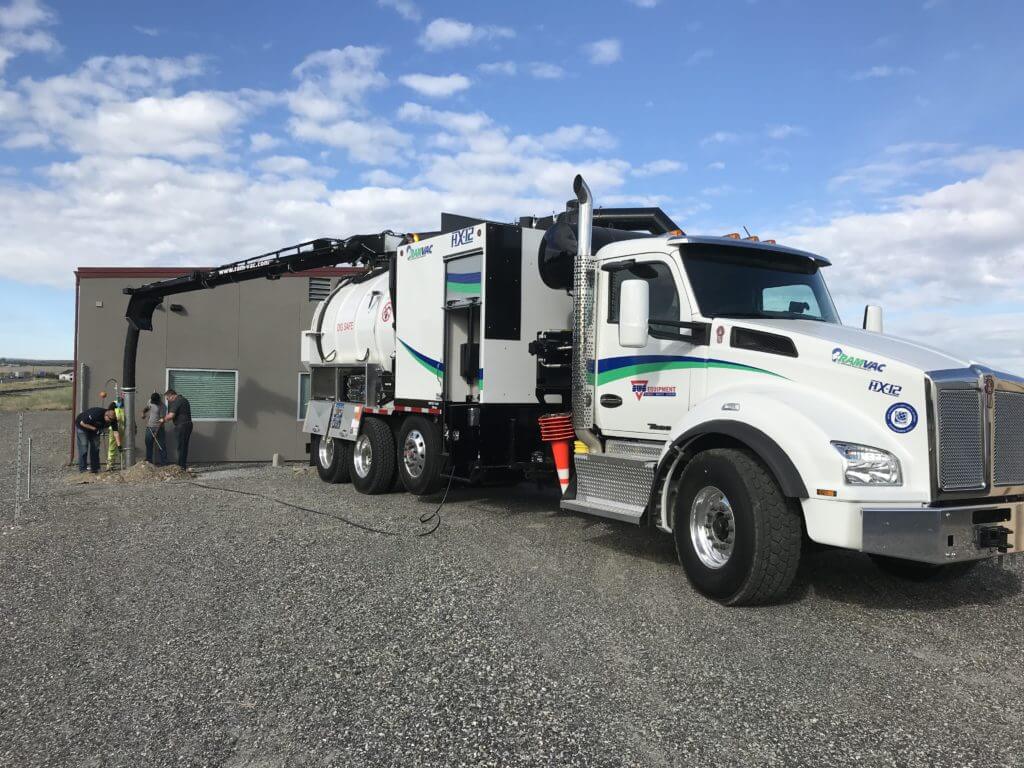
A hydro excavator unit must be filled with water at the start of the day (or at the end of the previous day). The refill process can take even longer if water is not available nearby, instead leaving an operator to drive far distances to fill up.
Larger hydro excavation units hold around 1300 gallons of water, whereas smaller units can have as little as 350 gallons. Even with the larger water tanks, you likely get between 3 and 5 hours of hydro dig time before running out of water. Now comes the big challenge: How far away is a water source from your job site? If you are lucky, your daily fill source is close by. If not, a significant amount of time can be spent traveling back and forth to obtain water for a hydro excavation job.
Meanwhile, air excavation units rarely require water and almost always operate for an entire day (sometimes a week) without needing to be refilled. It’s nice to have some onboard water when faced with a challenging dig spot, but it’s not always necessary. If your water source is close by, this would be a non-factor. However, if you are driving a distance to reach a water source, it could point toward air excavation being a better alternative.
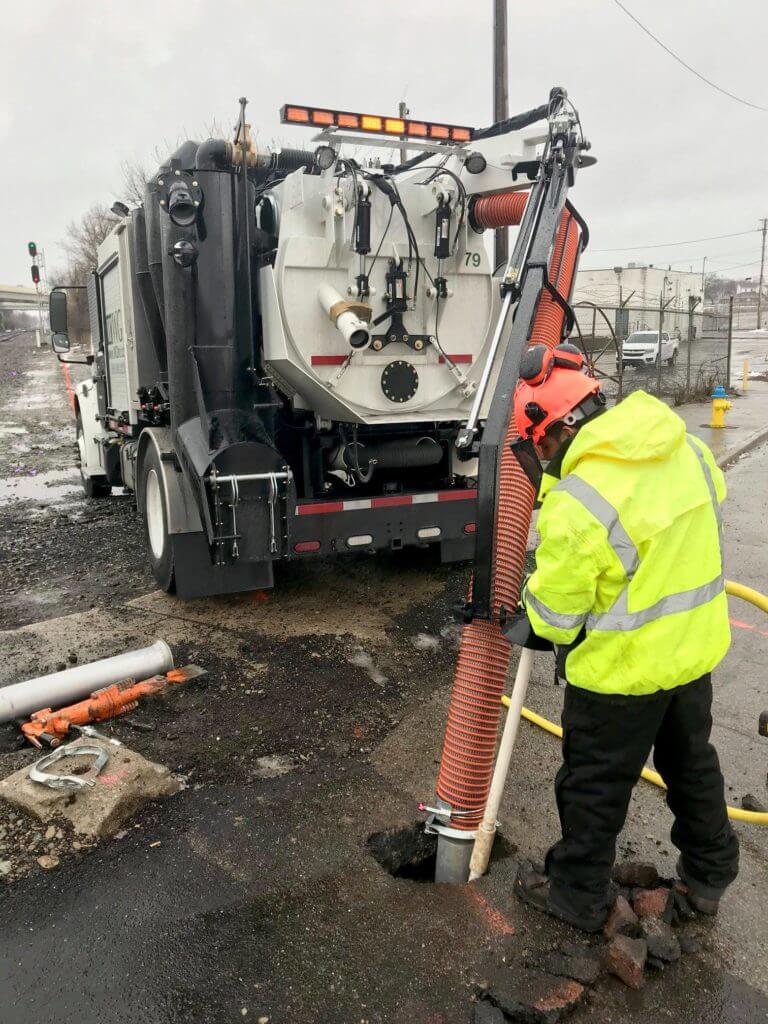
Similar to the location of the water source, adding travel to dump your debris tank can be a lengthy and costly non-value-added process for hydro excavation. Debris from the hydro excavation can rarely be used as backfill due to its slurry form and, therefore, must be disposed of at a different location. Air excavation debris is dry and can be used as backfill, allowing it to be dumped directly back into the same hole. Again, if your debris dump location is close, this could be a non-factor. If your dump location is a time-consuming travel distance away, air excavation may be a better alternative.
Understanding the scope of the project is an important factor in determining whether to dig with air or water. When do you get paid? Is it after the hole is dug and fenced off? Is it after the hole is dug, utilities exposed, repaired, documented, and the hole returned to its original condition? As previously discussed, debris from air excavation can be immediately used for backfill. In contrast, hydro excavation may require additional time and costs to haul backfill material to the job site for backfilling holes.
Let us revisit one of the original statements: “Water will always cut faster and help dig faster.” If you have a very large area (or several large areas) to dig, water will drive faster results. Digging faster, as well as utilizing large debris tanks commonly found on hydro excavation units, will help mitigate or reduce some of the aforementioned previous hydro excavator pitfalls, such as travel time to dump sites and water sources when excavating larger areas.
Hydro Excavation is generally preferred over digging with air when it comes to cold-weather applications.
We reviewed several time factors involved with common soft dig projects, and one could argue there are many more. Each project can be unique, so what is the better method, air or water? If you have a large area to excavate, can dump on-site, have a close water source, and do not have to backfill, then hydro excavation is your obvious choice. If you are digging small test holes, need to backfill when complete, and do not have a local spot to dump or fill with water, then using air excavation would likely be a better alternative.
You can read additional comparisons, as well as operator testimonials, between air and hydro excavation at Dig Different Magazine. Dig Different has also featured the RAMVAC AX-4000 Air Excavation Truck on their website.
Chris Falk is currently the Air Excavation Product Manager for RAMVAC Vacuum Excavators by Sewer Equipment. His knowledge and expertise on this subject stem from spending many years in the field, working alongside contractors from various industries on job sites that utilize excavation equipment in diverse applications, both in hydro and air environments. Chris has been an employee at Sewer Equipment for 14 years, with 6 years spent focusing on hydro excavation equipment and 4 years on the addition of air excavators. For follow-up questions and comments, contact us at sales@ram-vac.com
